
The Knife: Knowing Which Edge the Moment Needs
Most leaders pick one edge and call it a personality. Judgment is choosing the edge on purpose.

Most leaders have a default. They go soft, or they go sharp. And they call it their style.
It is not a style. It is a habit that stopped checking the room.
The Place Setting Framework names seven Elements of leadership.
This is the second one, and it sits right on top of the first.
The Knife is judgment
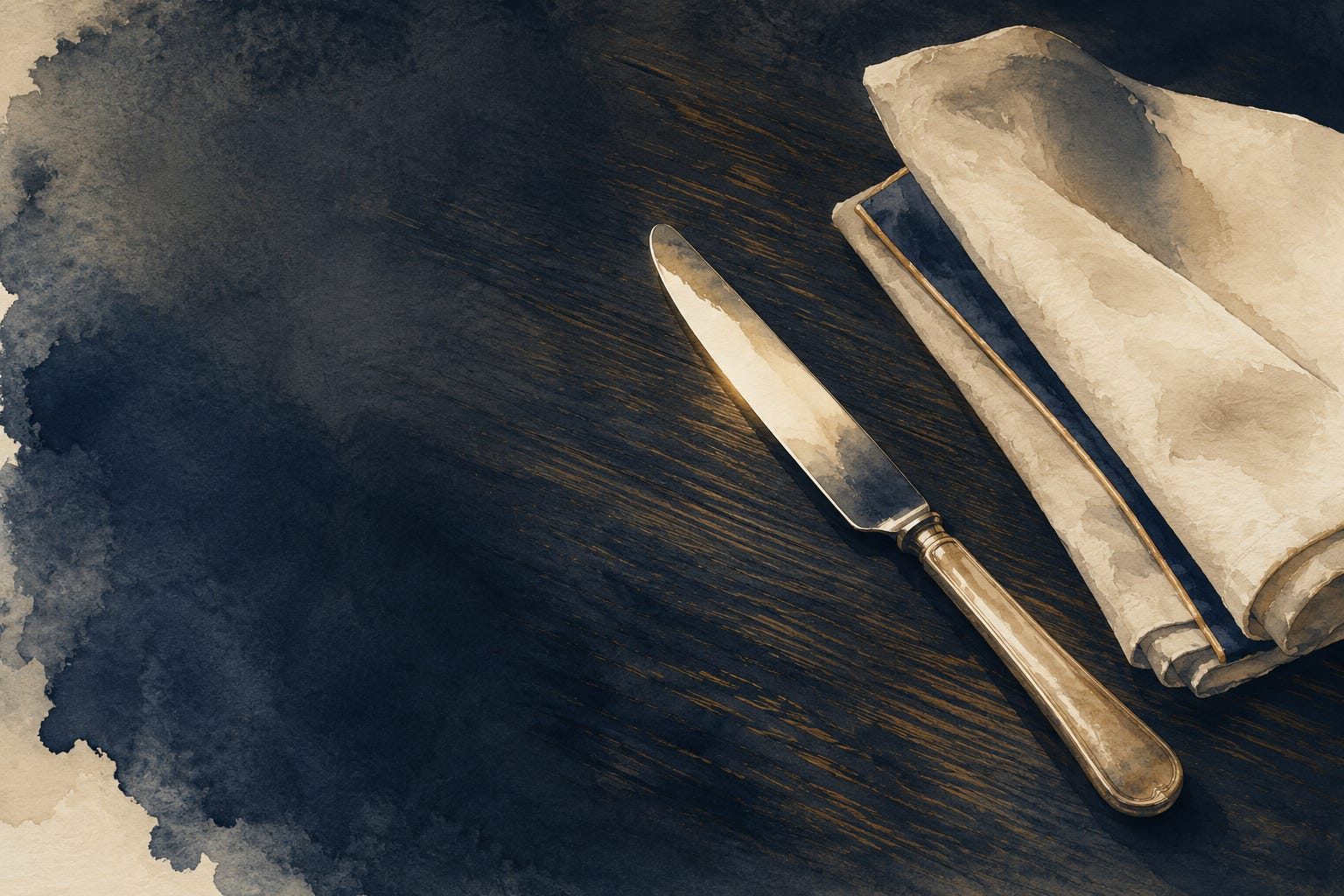
The Knife is judgment. Knowing which edge the moment requires. Every knife has two edges. A soft edge and a sharp one. The soft edge supports. It gives a struggling person room, treats a mistake as a conversation, lets trust grow. The sharp edge protects. It resets an expectation, names a standard that is slipping, stops drift before it becomes damage. Neither edge is wrong. Neither is the default. Most leaders pick one edge and call it a personality. The soft leader avoids the hard thing and calls it being supportive. The sharp leader cuts when a moment called for patience and calls it having standards. Both have stopped choosing. They run one edge on every moment, regardless of what the moment needs. The Knife is not a weapon. The blade faces inward, toward the work, toward the standard, never at the person. Its whole value is in the judgment of the hand that holds it. Leadership is not soft, and it is not sharp. It is knowing when to be both.
What the wrong edge costs
Get the edge wrong and it costs, both directions. Stay soft when a standard is slipping, and the team learns the standard is optional. Go sharp when a person needed support, and they stop bringing you the truth. Unresolved conflict is not free. It drains hours every week. It quietly teaches a team what cannot be said. Trust erodes without a single argument. The research is blunt on one point. Avoiding the hard conversation is mostly a skill gap, not a courage gap. The skill can be built. That is what this Element is for.
The question to sit with
Here is the question The Knife puts to every leader. Sit with it before you go further.
Do you choose your edge to fit the moment, or does the moment always get the same edge from you?
Find your one Play
You do not work on five things. You work on one. Over the next five posts, I will take each of the five Plays of The Knife in turn. Read this short diagnostic. The question that stings, or the one you cannot answer cleanly, points to where you start.
Reading the Moment. Before your last hard interaction, did you stop to ask what the moment actually needed? Or did you respond on instinct and find out afterward?
The Soft Edge. When someone needed support, not correction, did you give it cleanly? Or did your version of support come with an edge they did not need?
The Sharp Edge. Think of a standard slipping right now on your team. Have you named it plainly? Or have you let it drift because naming it felt like conflict?
The Pause. In the last moment that provoked you, did you put a beat between the trigger and your response? Or did the response arrive before the judgment did?
Clean Delivery. After your last hard conversation, did the person leave clear on the issue and intact as a person? Or did the message land in a way that left a mark?
Hold the one that landed hardest. That is your Focus Play. The post for that Play is where your work begins.
Next in this series, the first Play of The Knife. Reading the Moment. If this is landing, the conversation goes deeper on the podcast, A Student of Leadership.
